
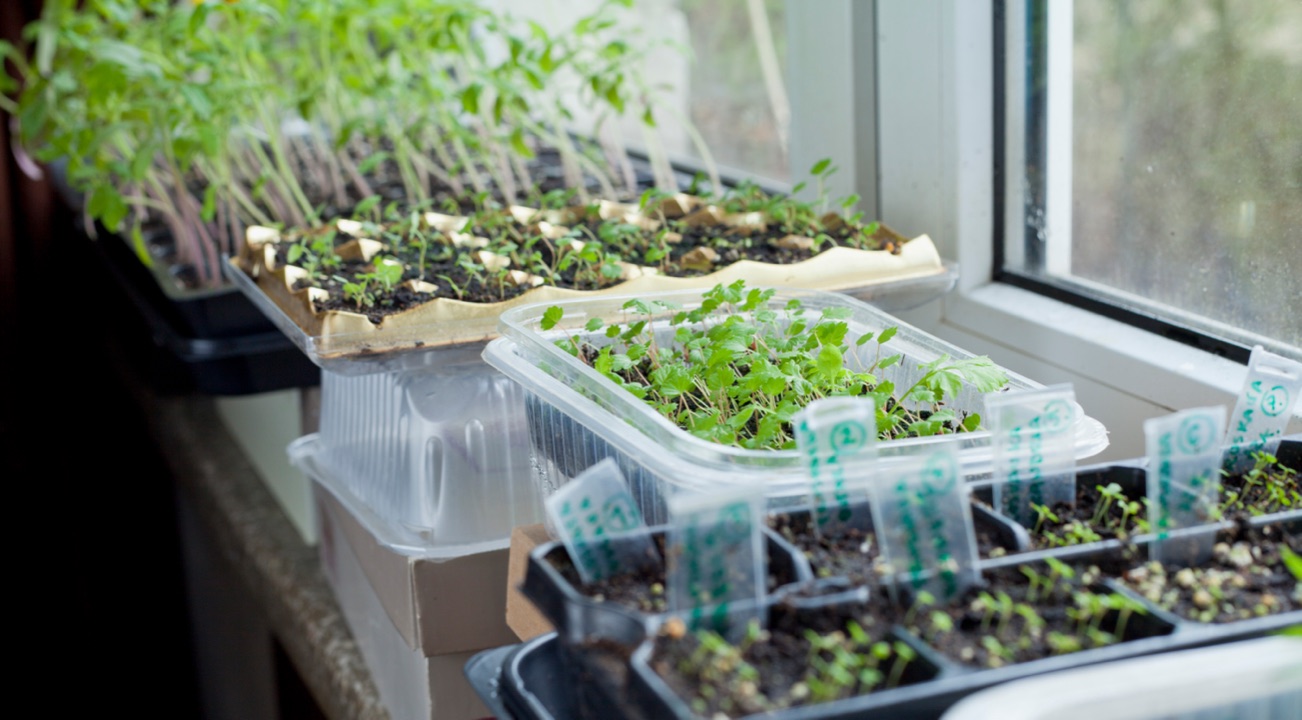
In Utah, we can start most vegetable seeds indoors between mid-January and late April. Onions should get started first, all the way in January right when you’re getting excited too early about the spring garden. Broccoli and cabbage follow in late January, and peppers and tomatoes wait until March or April. Your exact dates will depend on your last frost date, because every start date is counted backwards from the day the plant can go safely outside.
- Start first
- Onions, mid- to late January
- Cool-season crops
- Broccoli and cabbage, late January to mid-February; lettuce, February to mid-March
- Warm-season crops
- Peppers, mid-March to mid-April; tomatoes, late March to late April
- The rule
- Count back from your planting-out date, not from your hardiness zone
Seed-starting dates for Utah County
Utah County has varied frost dates! It spans from lake shore to mountain bench, so it is home to three different frost zones. I’ve listed out a few towns and which frost zone they belong to below. Find your zone, then check out the table to see your suggested dates.
- Early zone (average last frost May 1): Provo and Orem benches, Pleasant Grove, American Fork, Alpine, Highland
- Middle zone (May 14): Lehi, Saratoga Springs, Spanish Fork, Salem, Payson, Santaquin
- Late zone (May 21): West Provo, Vineyard, low ground near the lake and airport
| Crop | Early zone | Middle zone | Late zone |
|---|---|---|---|
| Onions | Jan 11 | Jan 11 | Jan 28 |
| Broccoli, cabbage | Jan 18 – Feb 1 | Jan 18 – Feb 1 | Feb 4 – 18 |
| Lettuce | Feb 6 – 20 | Feb 18 – Mar 4 | Mar 4 – 18 |
| Peppers | Mar 18 – Apr 1 | Mar 30 – Apr 13 | Mar 30 – Apr 13 |
| Tomatoes | Mar 25 – Apr 8 | Apr 6 – 20 | Apr 6 – 20 |
Seed-starting dates for Salt Lake County
Salt Lake County splits more neatly, into two zones.
- Early zone (average last frost April 30): Salt Lake City, South Salt Lake, Millcreek, Holladay, Cottonwood Heights, and the east benches of Sandy and Draper
- Late zone (May 13): Murray, Midvale, West Jordan, South Jordan, Riverton, Bluffdale, Herriman, and low ground along the Jordan River
| Crop | Early zone | Late zone |
|---|---|---|
| Onions | Jan 11 | Jan 11 |
| Broccoli, cabbage | Jan 18 – Feb 1 | Jan 18 – Feb 1 |
| Lettuce | Feb 6 – 20 | Feb 18 – Mar 4 |
| Peppers | Mar 13 – 27 | Mar 25 – Apr 8 |
| Tomatoes | Mar 20 – Apr 3 | Apr 1 – 15 |
In West Valley City, Taylorsville, Kearns or Magna, use the early column for cool-season crops and the late column for tomatoes and peppers.
Why you count backwards from planting day to figure out your seed-start date
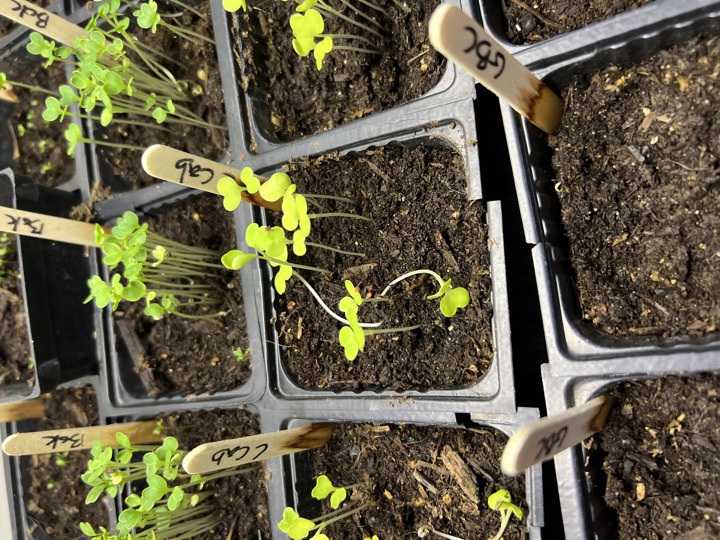
A seedling has a big job. It needs to be just the right size on the day it goes outside. If it’s too young, it will sulk and struggle in the garden. If it gets too old, it will likely get leggy and root-bound, which slows or stunts its growth after transplanting.
So every start date measures how long it takes that seed to grow into the sweet spot. Tomatoes need about 6 to 8 weeks to go from seed to a sturdy transplant, and they really shouldn’t go out until about two weeks after your average last frost. Broccoli and cabbage need a little longer indoors, but they’re hardy enough to go out weeks before the last frost. That’s why they get started in January, while tomatoes wait until spring is nearly here.
Outside Utah and Salt Lake counties
If you’re outside the counties I listed above, you can still work out your starting time from your own average last frost date (my Last Frost Dates in Utah, by City article in my Garden Notes lists 23 towns):
| Crop | Start indoors |
|---|---|
| Tomatoes | About 4 to 6 weeks before your last frost |
| Peppers, eggplant | About 5 to 8 weeks before your last frost |
Those count back 6 to 10 weeks from a planting-out day about two weeks after the frost. Cool-season crops are trickier to pin to a frost date, so look up your local planting-out dates for them first. USU Extension’s Utah Vegetable Planting Date Calculator is amazing and will give you a frost date by city or even ZIP code.
Starting seeds: the short version
- Use fresh seed-starting mix, never garden soil, which can carry diseases that kill seedlings.
- Keep the soil warm for sprouting. Tomatoes, peppers and eggplant want 65–85°F; a heat mat helps for sprouting (but you probably don’t need it after). Lettuce and celery prefer it cooler, 50–65°F.
- Give them real light. A sunny window isn’t enough. If you invest in some grow lights, it could very well mean the difference between a successful seeding season and a big disappointment. Run those lights 12 to 14 hours a day, 2 to 4 inches above the seedlings, and raise them as the plants grow.
- Keep the room comfortable, 60–80°F by day and a little cooler at night if you can.
- Harden them off for about two weeks before planting. Put them an hour outside in the afternoon at first, then a little longer each day, until they can stay out overnight.
Notes from My Garden
My first year using grow lights for my seedlings completely revolutionized the process, and I’ve since doubled down. You can get some cheap shelves and lights with adjustable chains so it’s easy to raise the lights as you go.
I didn’t count on just how close to the soil the lights would be at the outset. As a result, the lights’ spread isn’t as wide as when it’s, say, ten inches above the seeds. That means that I was going crazy switching the lights that I did have back and forth between trays to make sure everyone was getting the light they needed. The solution is simple. Make sure you purchase enough grow lights to cover all your rows of seeds.
Is there a zone 6b seed-starting schedule?
Not really. Your hardiness zone tells you how cold your winters get, not when spring arrives. Two zone 6b gardens can have last frost dates weeks apart, so seed-starting dates come from your last frost date instead. I got into this in more depth in my What Is Zone 6b Garden Notes entry.
Is February too early to start tomatoes?
In northern Utah, very likely yes. I know it’s hard to wait because right around February winter feels so oppressive. But a February tomato usually ends up lanky and root-bound by the time its transplant day comes in late May. But don’t lose heart. You can have all your February garden fun with onions, broccoli, cabbage and lettuce. Save the tomatoes for spring.
What shouldn’t I start indoors?
Root crops like carrots, beets and radishes, and big-seeded crops like peas and beans, do best sown straight into the garden. Squash, cucumbers and melons can be started indoors a few weeks early, but they grow fast and resent root disturbance, so many gardeners simply sow them outside. Some years I do both, starting some squash indoors and some outdoors, and have a little contest to see which plant does the best.
What about St. George?
Southern Utah runs about a month ahead. With an average last frost around March 30, tomatoes go out in mid-April, so seeds start from mid-February to early March. You can run the same math based on your last frost date.
Common mistakes
- Starting too early. Big, old transplants struggle. Trust in the countdown.
- Skimping on light. Pale, stretched seedlings almost always mean the lights are too far away or not on long enough.
- Putting everything on the heat mat. Lettuce and celery sprout better cool, and too much time on the heat mat encourages mildew. Use it to sprout tomatoes and peppers, then let it rest. It’s done its job.
- Skipping hardening off. Seedlings straight from the house can scorch or stall outside. Nothing is sadder than watching your plant babies get roasted by harsh Utah UV.