
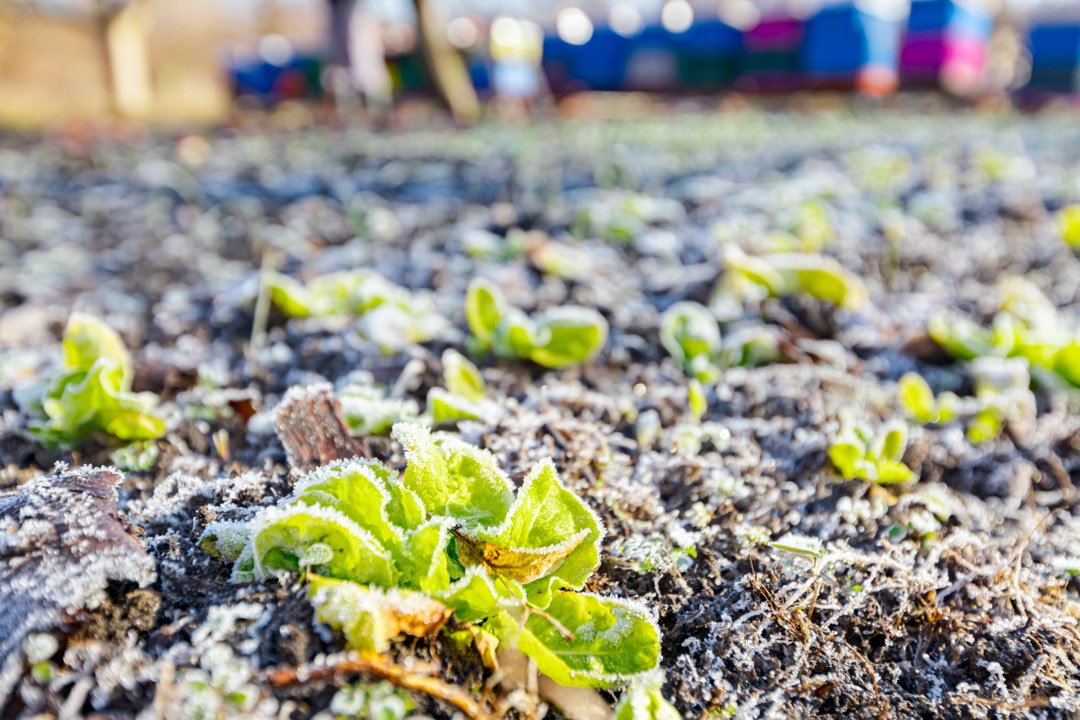
Utah has no single last frost date. The average last spring frost runs from late March in St. George to late June in high valleys like Woodruff, and most Wasatch Front cities fall between late April and late May.
But even in one city, the frost date can span three weeks. For example, in Provo, the average last frost on the east bench is May 1, while near the Provo airport it’s May 21.
| City or station | Average last spring frost |
|---|---|
| St. George | March 30 |
| Moab | April 18 |
| Salt Lake City (airport) | April 26 |
| Salt Lake County (Cottonwood Weir) | April 30 |
| Provo (BYU) | May 1 |
| Ogden | May 3 |
| Tremonton | May 3 |
| Farmington | May 5 |
| Logan (USU campus) | May 7 |
| Tooele | May 7 |
| West Jordan | May 10 |
| Price | May 12 |
| Midvale | May 13 |
| Santaquin | May 14 |
| Nephi | May 16 |
| Cedar City | May 21 |
| Provo (airport) | May 21 |
| Logan (southwest farm station) | May 23 |
| Vernal | May 27 |
| Richfield | May 28 |
| Heber | June 11 |
| Coalville | June 18 |
| Woodruff | June 26 |
Why the dates vary so much
Elevation. Higher ground is colder, so frost hangs on later. Heber, at the head of a mountain valley, averages more than a month behind Provo.
Cold air pooling. On clear, still spring nights, cold air slides downhill and settles in the lowest ground, like water filling a bowl. So the valley floor near Utah Lake frosts weeks later than the benches above it, even though the benches are higher. Gardeners call these low spots frost pockets (not to be confused with Hot Pockets).
Your own yard. A south-facing wall, a slope, or a big tree overhead can shift your frost date by days. Your yard is its own microclimate.
Utah County, in three frost zones
Because Utah County spans lake shore to mountain bench, I split it into three zones:
| Zone | Average last frost | Towns |
|---|---|---|
| Early | May 1 | Provo and Orem benches, Pleasant Grove, American Fork, Alpine, Highland |
| Middle | May 14 | Lehi, Saratoga Springs, Spanish Fork, Salem, Payson, Santaquin |
| Late | May 21 | West Provo, Vineyard, low ground near the lake and airport |
Canyon yards and high benches can run later than the late zone.
What “average” really means
An average last frost date is just that: an average. In some years the last frost comes earlier, and in others it comes later. That’s why very tender plants like tomatoes and peppers go out about two weeks after the average date, not on it.
Different sources also figure their averages differently, so you may see other dates for the same town. The table above uses USU Extension’s numbers, while the example dates on my Beat the Frost Cheat Sheet come from NOAA climate normals.
Notes from My Garden
I’m really not kidding about the microclimate. To better understand your yard’s frost date, you’ll need to keep track of the temperature, or be bold and risk losing a plant or two. Pay attention to sheltered areas, either from wind (which may push your frost date earlier) or from sun (which might push it a little later). Sometimes, even the amount of concrete and stone you have may shift your date by a few days. If we get some good sunshine that heats those materials up all day, the emanating heat through the evening may keep the soil from getting quite so cold.
How do I find the frost date for my own yard?
Start with the nearest town in the table, then adjust for your spot: earlier if you’re on a warm bench or slope, later if you’re in low ground, near water, or up a canyon. For a date tied to your city or ZIP code, try USU Extension’s Utah Vegetable Planting Date Calculator. Best of all, like I mentioned above, keep a simple note each spring of your last frost. Note if it’s different in different parts of your yard. After a few years, you’ll know your yard better than any table.
What can I plant before the last frost?
Plenty. Hardy crops like peas, onions, spinach and radishes go in as soon as the soil crumbles in your hand, about five to seven weeks before the last frost. Semi-hardy crops like lettuce, carrots, beets and potatoes follow about two weeks before it.
Common mistakes
- Using one statewide date. A “Utah last frost date” can be off by two months.
- Planting very tender crops on the average date. Give tomatoes, peppers and melons some cushion to make sure a rogue, late cold night doesn’t spoil your fun.
- Ignoring your own low spots. The bottom of the yard can frost when the top doesn’t.
Last updated November 6, 2026
Sources
- Suggested Vegetable Planting Dates for Utah, Utah State University Extension (average last spring frost by station)
- Utah Vegetable Planting Date Calculator, USU Extension