
Seed-Starting Setup for Utah: Lights, Trays and Heat Mats
By Kenny Baldwin · November 16, 2026
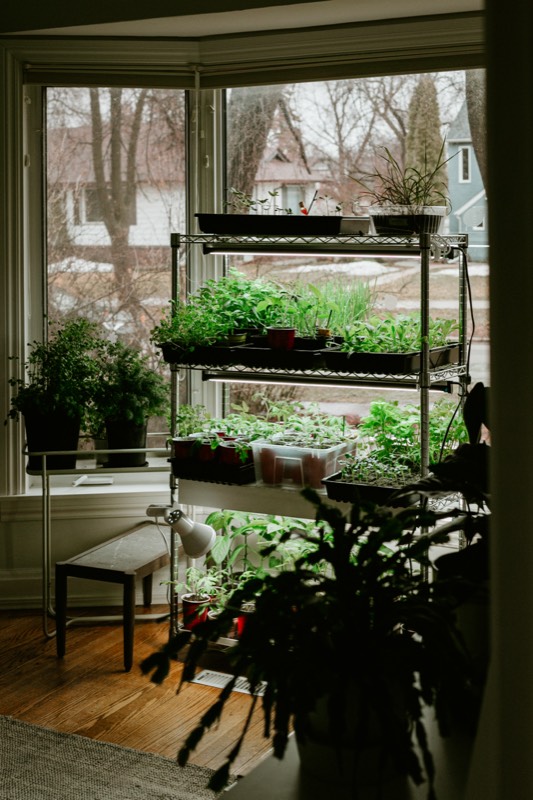
Starting your plants from seeds is one of the most rewarding and cost-saving habits you can build as a gardener. There’s nothing better than planting out seedlings that you nurture from a speck of seed. So let’s dive into how you can be best set up for success.
To start seeds indoors in Utah, you need a handful of things:
- A light hung 2–3 inches above the seedlings for 12–14 hours a day
- A plug-in wall timer (you’ll plug your grow lights into these)
- Trays or cells that drain, with a plastic dome or cover
- A fine seed-starting mix
- (optional but helpful) A heat mat with a thermostat for tomatoes and peppers. How much heat you need depends on where the trays sit: a cool basement usually needs a mat, while a warm upstairs room may not
- (optional but helpful part two) A rotating fan
Get your setup figured out and tested about two weeks before your first sowing date. That date depends on your town’s last frost, so check my Garden Notes article on When to Start Seeds in Utah first.
100% Non-negotiable: Grow lights
I’ve been there. I tried the window. I tried the sunny room. At best, seed starting without grow lights is really unreliable. At worst, you won’t get any plants.
Fortunately, you don’t need to overthink it either. A plain shop light does the job just fine. Fluorescent or LED, shop light fixtures work well, and you don’t need anything sold as a “grow light.” Hang it from adjustable chains so you can raise it as the plants grow, and plug it into a cheap wall timer set for 12–14 hours on.
Keep the light 2–3 inches above the leaves, and raise it as they grow. If your light fixture runs hot, check for scorched leaf edges and move the lights a little higher to avoid the burn. Be sure you have enough fixtures to cover your whole tray. Your seedlings will bend and grow toward the strongest light available, so if you’re trying to stretch your light, expect your seedlings to stretch right back.
This is also why you need to put the lights so close. Seedlings stretch toward light. If the light is too far from the seedling, it grows a long, pale stem that flops over. That’s called legginess. Utah’s bright winter sun doesn’t fix this, because a window gives too few hours and the light comes from one side. It’s not a strength issue as much as a time of exposure issue.
Trays, cells and seed mix
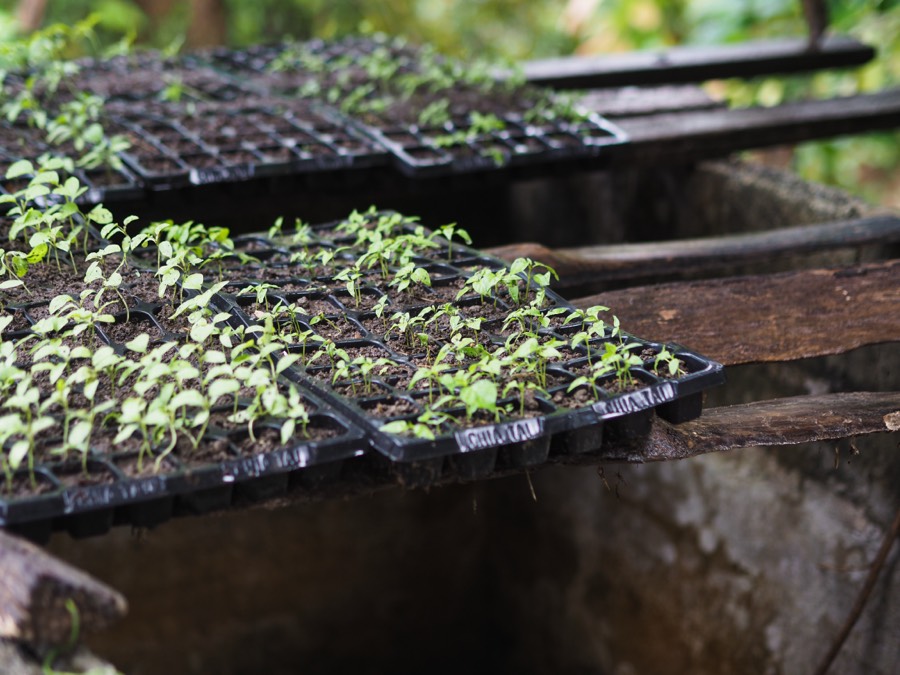
Trays. My favorite setup is to put your seed mix into a tray of cells and then put that into a solid tray. That way you can water from the bottom by putting water in the solid tray. Cell inserts of 36, 48 or 72 cells per flat are the common home sizes. Make sure to buy the cell variety with drainage holes (though I think those are the norm and you’ll struggle to find ones without). You could even use yogurt cups if you poke holes in the bottom.
Reused trays. If you’re using last year’s trays, scrub them clean, then sanitize them with a 10% bleach solution. Bleach makes plastic brittle over time, so expect to replace old inserts. But in my experience, you’ll need to replace them anyway sooner or later. The Utah UV is hard on them.
Seed mix. Buy a soilless mix made for seed starting, based on peat or coconut coir. Skip garden soil and potting mixes with chunky bark. A homemade version is equal parts peat moss and perlite or vermiculite.
Domes. A clear plastic dome keeps moisture in while seeds sprout. Take it off when about half the seeds are up, or mold and damping-off follow. (Damping-off is a fungus that rots seedlings at the soil line.)
Heat mats
Heat mats are incredibly helpful and a little overhyped at the same time.
A heat mat is a waterproof pad that warms the tray from below. Most crops sprout readily with soil at 65–75°F. But some plants, namely tomatoes and peppers, sprout faster at the warm end of that range. In a cool room, their sprouting slows them significantly, messing up your timeline.
Buy a heat mat with a built-in thermostat, or add one. If you don’t know the temperature, you’re very likely to cook those seedlings. The thermostat’s probe goes into the mix, so it reads soil temperature rather than air temperature. A kitchen thermometer works for spot checks.
Once seeds sprout, turn the mat off or unplug it. Growing seedlings want nights of 60–65°F and days about 10 degrees warmer. If it’s warmer than that, they get spindly.
Another common mistake I see is people using the heat mat to sprout everything. In some cases, it’s just an unnecessary step. In others, like broccoli, cabbage and spinach, which prefer 55–65°F soil to sprout, you might actually be making life harder for your seeds.
The extras that matter in Utah
A small fan. This is a great trick. Submitting your seedlings to a light breeze for a few minutes a few times a day thickens stems and cuts down on damping-off (remember that fungus we mentioned). Keep it gentle, though. We’re not trying to dry anything out.
Watch the water. Speaking of things drying out, winter air in a heated Utah house is dry, and the mix can go from dark brown to pale in a day under your grow lights. You can usually feel the difference. Lift the tray: if it feels much lighter than it did when you watered it, add water. Bottom watering in 1–2 inches of water works well.
Hard water. Most Wasatch Front tap water is fine, but it carries minerals, which can build up in your soil. So occasionally, you may want to water from the top to flush salt buildup. When you do, throw out the drained water rather than letting the cells soak it back up.
A place you don’t mind getting wet. Spills happen. Drips happen, too. So use a place you don’t mind getting a little wet for your seed starting setup. A basement shelf, a laundry room, a folding table on a tarp, anything along those lines.
Notes from My Garden
For my latest seed setup, I purchased two inexpensive five-foot wire shelving units with adjustable feet. I set them both up beside some south-facing French doors in my basement.
The adjustable feet helped me keep the shelves level so that bottom-watering stayed even. If your tray isn’t level, the water will pool to one side. And while the extra light from the French doors was nice, it did have a tendency to pull the seedlings in the cells farthest from the door toward the window. So I had to deal with some stretching and leaning. I rotated the flats every few days to battle that.
My basement entrance was also a nice place to harden off the seedlings when the time came because it was mostly sheltered, and I could nudge them out into the sun a little bit at a time.
Can I just use a sunny window?
Unfortunately, a sunny winter Utah window is simply not enough sunlight for most vegetables. And before you say your window is really bright, remember, this is a cumulative hours question. A window gives too few bright hours in late winter, and seedlings lean and stretch toward the glass. Use the window for extra light if you like, but you’ll need your own lights if you want to succeed.
Do I need LED grow lights?
No. Fluorescent or LED shop lights work well for seedlings. The bigger question is how close you can get the light to the plants. A cheap light 2 inches away will usually beat an expensive one hung a foot up. So I’d use the money on making sure the light is adjustable for height.
Is a heat mat worth it?
For tomatoes and peppers in a cool room, yes. It is completely worth it. They sprout slowly and unevenly in cold mix. But again, it’s not a universal helper. Lettuce, broccoli and cabbage sprout fine at cooler temperatures, so they don’t need one.
What makes a good seed-starting gift?
If you want to delight the gardener in your life, this is an easy winner. It’s also great because even if they have a seed starting setup, they secretly want a larger one...
Get them a shop light with chains, a plug-in timer, a heat mat with a thermostat, a 72-cell tray kit with a dome, and a bag of seed-starting mix. Add a few packets of tomato or pepper seed and a planting calendar for the gardener’s area.
Common mistakes
- Lights too high. The seedlings will stretch and flop. Lower the light to 2–3 inches and raise it as they grow.
- Heat mat left on after sprouting. Plants get tall and weak. So be sure to unplug it once seeds are up.
- Dome left on too long. This leads to mold and damping-off. Remove it when about half the seeds have sprouted.