
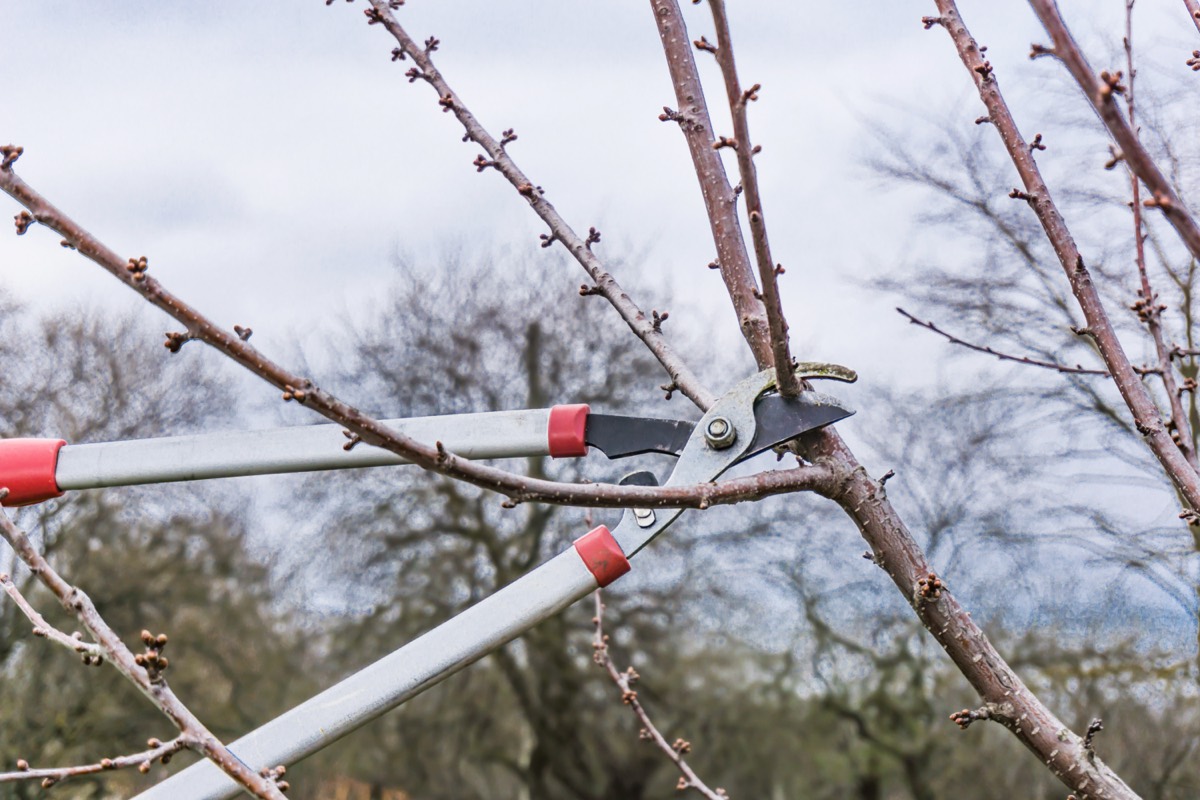
As a rule of thumb, in most of northern and even central-ish Utah, prune fruit trees in late winter, while they’re still dormant and after the hardest cold has passed. Usually, that means somewhere around February or March.
There’s a window you’re aiming for. You want to prune late enough that the worst of winter won’t damage the tree where you’ve made new cuts, but early enough (especially for fruiting trees) that they can take advantage of the early spring growing burst and they can set blossoms.
If you’re reading this in fall, put the pruners away. Fall pruning can push new growth that won’t harden off and build its own protections before winter.
Why late winter?
When a tree drops its leaves and stops growing, it enters a dormancy period. When you prune while trees are dormant, you can see every branch, and the tree answers in spring with new growth right where you cut.
The downside, of course, is cold. A fresh pruning cut makes the branches around it less cold-hardy for a couple of weeks. If you prune in early January and an arctic snap comes on, it can damage the wood around the cut. So wait until the worst of winter has passed, and check the 10–14 day forecast before you start.
You might be wondering, well if my tree enters dormancy in fall, why not prune then? Unfortunately, though, fall is usually worse. The cuts you make in October or November can wake up buds that push soft growth, and that growth freezes and dies off.
Timing by fruit tree
Apples can be pruned earliest. In Utah Valley, February is a good time to start on home apple trees. Apples are hardier than stone fruit, so early cuts carry less risk.
Tart cherries fall in the same February-to-March dormant window.
Stone fruits like peaches and apricots should wait. Peaches, nectarines, apricots and plums are the tender ones. In Utah Valley, a good pruning window usually falls between mid-March and mid-April. But pay attention to the forecast. Peaches bloom early, and if it’s an unusually warm winter, waiting too late may mean lopping off branches full of blooms.
With several kinds of trees, work through them in that order: apples, then cherries, then the peaches and apricots last.
Elevation changes the date
Just like how the last frost date varies, there’s no single pruning date for the state, valley, or sometimes even the same city. The timing shifts with where you live. A yard high on the bench can stay in hard cold longer than one on the valley floor. Southern Utah cities, on the other hand, play by totally different rules. Peaches in St. George, for example, can be pruned as early as January.
If you don’t know your zone or frost dates, start with Last Frost Dates in Utah, by City and What Is Zone 6b. A later last frost usually means a later pruning window too.
Pruning 101: What to cut first
Make cuts in this order:
- Remove dead, damaged and diseased wood.
- Remove branches that cross or rub against other branches.
- Thin or remove branches growing into the center of the tree or straight down.
- Once those hygiene cuts are finished, then thin for shape and light.
Light is the big prize here. Fruit can form only where the sun reaches, so an open canopy with fewer branches may still out-produce a crowded tree, and the fruit will certainly be better quality. On a mature peach, removing 30–40% of last year’s new growth each year is normal. Typically, most people prune too lightly, not too hard.
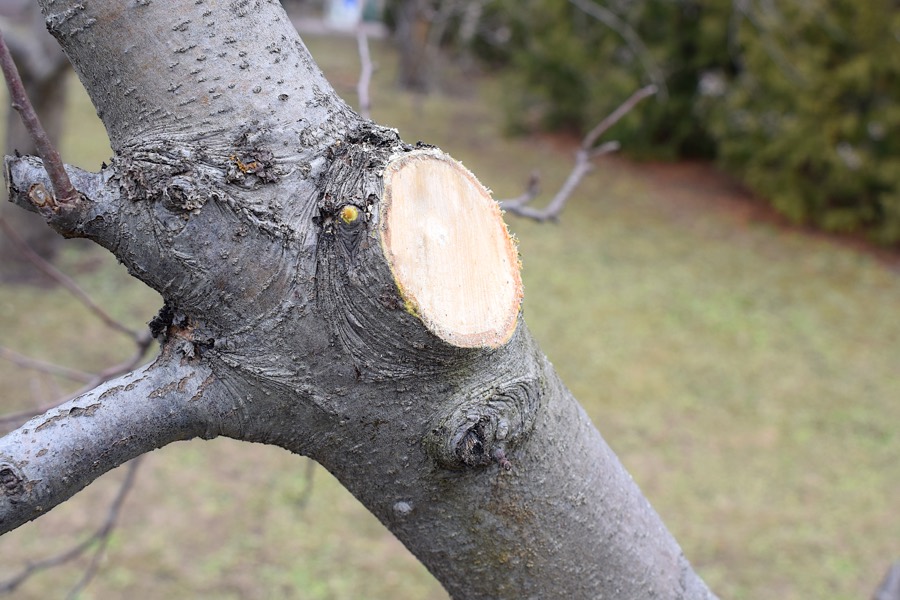
Cut just outside the branch collar, the slightly swollen ring where a branch meets its parent. Don’t cut flush, don’t leave stubs, and skip the wound paint. It really isn’t necessary.
Pruning Tidbits: Disease and weather
You shouldn’t prune during rain or snow, or right after. Wet cuts can spread fungal and bacterial diseases more easily, including an infamous blight on peaches called Coryneum blight.
Apples suffer from their own famous blight, too. It’s called fire blight, a bacterial disease common in Utah that you can identify by seeing shoot tips turn black and curl into a shepherd’s crook shape. Make your cut 8–12 inches below the lowest sign of infection.
Notes from My Garden
I love pruning trees. To me, it has the same satisfaction as watching those great pressure washing videos online. A well-pruned tree, to me, looks immediately more elegant and elevates the feel of your yard.
This might be because I’ve definitely failed to prune fruit trees well in the past and suffered the awful consequences. One of the first fruit trees I ever planted was an Anjou pear, and I let that thing do whatever it liked. Six years later, after being disappointed by poor production and poor growth, I decided to try pruning. By then, the pruning was significantly more difficult, and I had to remove huge branches that had sapped so much aggregate energy from the life of the tree.
As I did, I had to wonder what that tree could have been in six years if I’d just set it up for success from the get go.
Is it too late to prune once buds start to swell?
No. Light pruning as buds swell or even near bloom won’t hurt most trees. Late is safer than early, especially for peaches and apricots.
Should I prune a newly planted tree?
You can, and sometimes you really should right after planting. Young trees need training cuts to set up a strong frame of main branches, called scaffolds. In fact, I know it’s not sexy and exciting, but fruit trees really shouldn’t be used for fruit for their first few years after planting. Use that time to prune and shape them for success. Patience is a virtue.
Do I need to prune every year?
Yes, and for some trees it’s even more important than others. Peaches only fruit on wood that grew the summer before, so if you skip a year, it means less fruiting wood the next. Apples and cherries also stay more productive, and easier to pick, with yearly pruning.
Can I prune in summer?
Yes-ish. Light summer cuts, such as removing upright water sprouts, or removing diseased or damaged branches are fine. But save the main structural pruning for late winter.
Common mistakes
- Pruning in fall. New growth freezes. Wait until late winter.
- Pruning before a cold snap. Fresh cuts weaken cold hardiness for about two weeks. Check the forecast first.
- Cutting too little. The canopy stays shaded and fruit suffers. Thin your branches enough that light can reach the center and call those fruits forth from the tree.
Last updated November 23, 2026
Sources
- USU Extension: How Do I Prune a Peach Tree?
- USU Extension: Training and Pruning Apple Trees
- USU Extension: Training and Pruning Tart Cherries (2020)
- USU Extension Garden Help Desk, Daily Herald: Fruit tree pruning season draws near (2021)
- Virginia Cooperative Extension: Pruning Peach Trees
- USU Extension, Utah Public Radio: Pruning Fruit Trees