
The best time to plant garlic is in the fall, from mid-September through early November, so the cloves can grow roots before the ground freezes. In Utah County and most of the Wasatch Front, that whole window works well. If you’re in colder mountain valleys, aim for the early end of that window.
- Plant
- Mid-September to early November
- Depth
- 2–3 inches, pointed end up
- Spacing
- 3–4 inches apart, rows 6–10 inches apart
- Feed
- Nitrogen in mid-April and again in late May
- Harvest
- Next summer, when the tops start to yellow or flop over
Why garlic goes in the ground in fall
Garlic (Allium sativum, for you fancy Latin enthusiasts) is a hardy crop, meaning it shrugs off frost and snow. It roots in autumn, sits through the winter, then puts on leaves fast and early in spring and swells its bulb as days lengthen into summer. That long run-up is what makes a fat, delicious head of garlic.
If you plant in spring, the garlic will still grow, but in Utah it usually gives small bulbs. This is especially disappointing when you see a lot of foliage on it. If you missed fall, plant as early in spring as you can dig.
How to plant
- Pick a sunny, well-drained spot. Garlic isn’t fussy about soil type, as long as water doesn’t sit there.
- Work in a little compost, no more than about an inch over the bed.
- Break the heads into cloves a day or so before planting. There’s no need to peel them. In fact, the papery skin protects the clove.
- Plant the biggest cloves, pointed end up, 2–3 inches deep and 3–4 inches apart. Big cloves make big bulbs, so cook with the little ones, garden with the big ones.
- Water them in, then mulch with a few inches of straw or shredded leaves. Mulch protects the cloves through freeze and thaw and smothers spring weeds.
Hardneck or softneck?
- Hardneck garlic makes fewer, larger cloves and sends up a curly flower stalk, called a scape, in early summer. It has a richer flavor but stores for a shorter time.
- Softneck garlic has more, smaller cloves, no stalk, and keeps for months. If you’ve ever seen braids of garlic, you’re looking at softneck bulbs.
Both grow well here. Many gardeners plant some of each: hardneck to eat first, softneck to keep.
Notes from My Garden
Garlic is one of those crops that has beautiful variety that is simply never present in the grocery store. My favorite garlic is a variety called Spanish Red. I got into conversation about it with a farmer one summer while visiting his raspberry patch. He sent me home with a head of Spanish Red to try in my garden the next year. It was a long wait, but when we dug up those cloves the following year, we made some of the best garlic bread I’ve ever had.
Garlic isn’t incredibly expensive at the grocery store, but you’ll never enjoy the variety and nuances of different types. And it’s easy to grow, so go on, get experimenting already.
Is it too late to plant garlic in November?
Not if you can still dig! Early November is the usual end of the window. If the ground is workable, plant, water and mulch well. If it’s frozen solid, hold your cloves somewhere cool and dry and plant the moment the soil thaws in spring.
Can I plant garlic from the grocery store?
You can, but it’s a gamble. Store garlic may have been treated to slow sprouting, may have sat in storage a long time, and may carry diseases you don’t want in your soil for years. It’s best to buy seed garlic from a garden center or seed company.
Should I cut off the scapes?
Yes. Snap off hardneck scapes when they curl, so the plant puts its energy into the bulb. As it turns out, the scapes are delicious, too: think mild garlic with the snap of a green bean.
When is garlic ready to harvest?
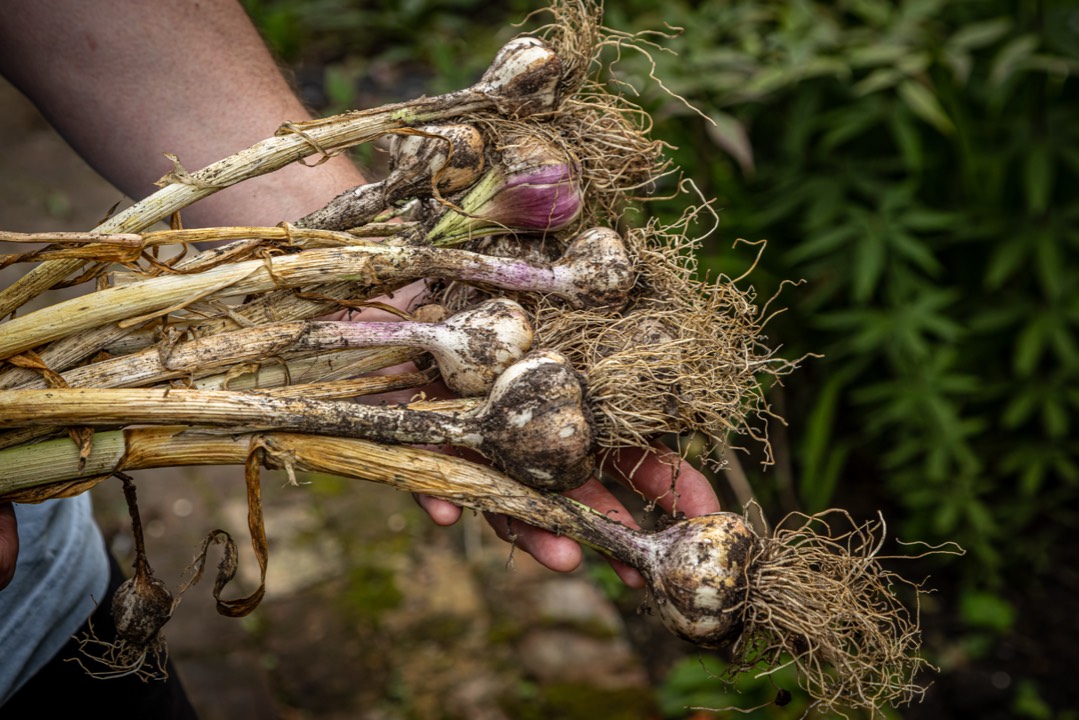
When the tops of the garlic begin to yellow or fall over, but the plant hasn’t gone completely dry, it’s a good time to pull them up. Stop watering when the leaves start to yellow. If they end up in wet soil at the end of the season, it leads to poor storage potential. Lift bulbs gently with a fork, then dry the whole plant in a warm, shady spot for one to two weeks, until the skins are papery and the roots are dry.
Common mistakes for new garlic growers
- Peeling the cloves. Plant them in their skins.
- Watering right up to harvest. Stop when the leaves yellow, or the bulbs won’t cure well.
- Harvesting late. Overripe bulbs split open and store poorly.
- Skipping the spring feeding. Garlic is hungry in April and May, just when it’s easy to forget.
Last updated November 6, 2026